



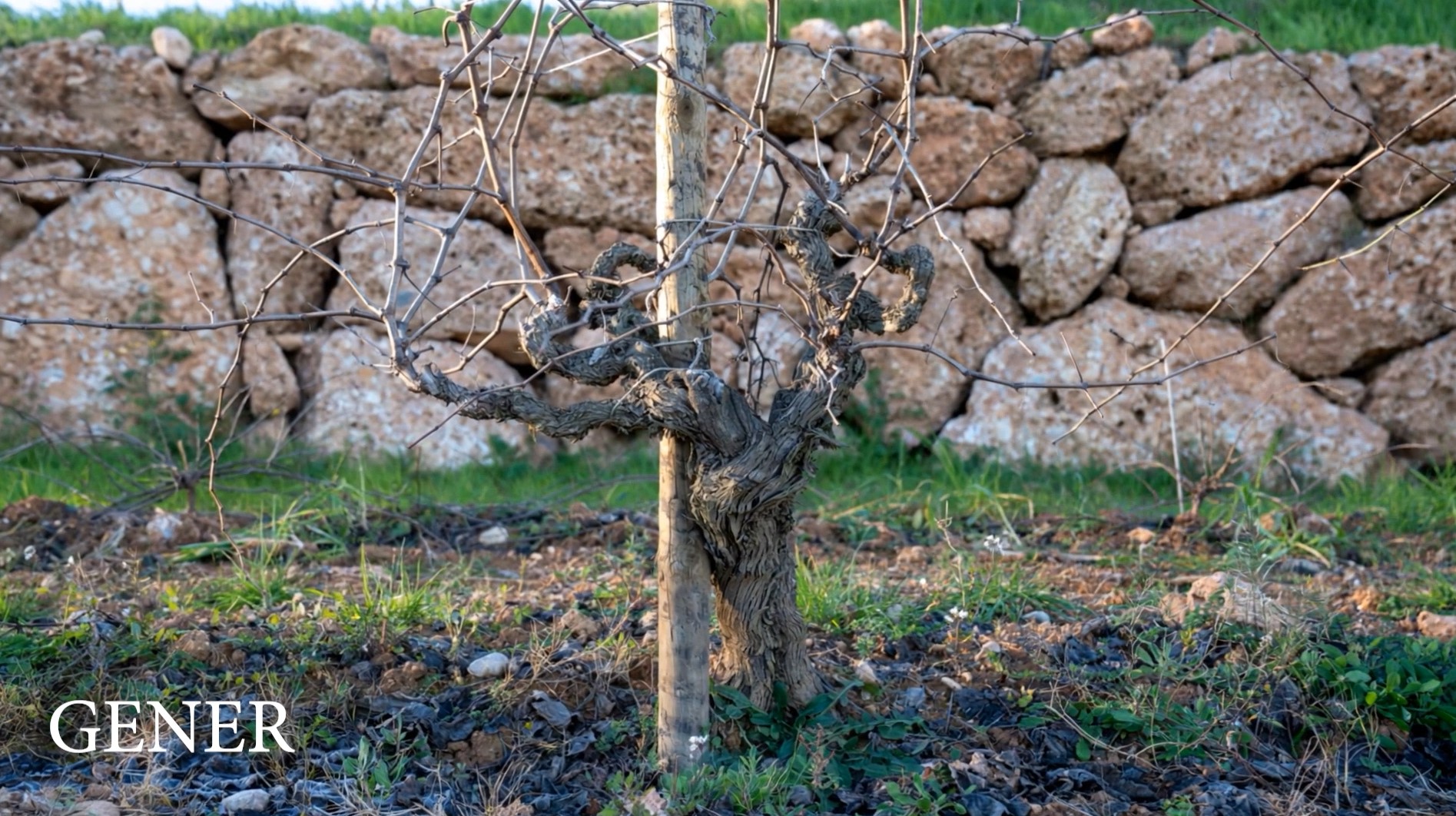
After the manual harvest, which marks the end of the production cycle, the vines enter a period of dormancy. During autumn, the leaves turn golden and reddish hues before falling, while the plants store reserves to withstand the winter months. Traditional Penedès grape varieties such as Xarel·lo and Macabeu play a central role in this process. Having adapted over centuries to the region’s climate and its soils, they form the foundation of many of the area’s most distinctive wines and sparkling wines. With the arrival of autumn and winter, essential tasks such as respectful pruning are carried out. This practice helps regulate vine growth and ensures a balanced crop for the following season. Autumn is also an ideal time for fertilization with biodynamic compost, a method that enhances soil vitality and stimulates biological activity. In spring, the vineyard awakens with budburst. Spring is also an ideal time for fertilization with biodynamic compost. This is the period when cover crops are managed, helping to improve soil structure, promote biodiversity, and regulate moisture levels. As the season progresses, green pruning is performed, removing unnecessary shoots to improve air circulation and sunlight exposure around the grape clusters. During summer, the vines complete the ripening process. Continuous observation and careful vineyard management allow the traditional varieties to fully express their character, preparing the way for a new manual harvest that will once again begin the annual cycle of the vineyard in the Penedès.